









The Life We Imagine
Some of life’s most important decisions can't be fully predicted. They can only be understood by living them.





We increasingly ask AI to help us make sense of uncertainty. It can surface hidden risks, challenge our assumptions, and help us make more informed decisions. Yet some of life’s most meaningful choices remain resistant to prediction because they involve futures that have not yet unfolded, and versions of ourselves we have not yet become. Through the experience of buying a first home, this essay explores what it means to begin living in a life that, for a while, exists only in our imagination.
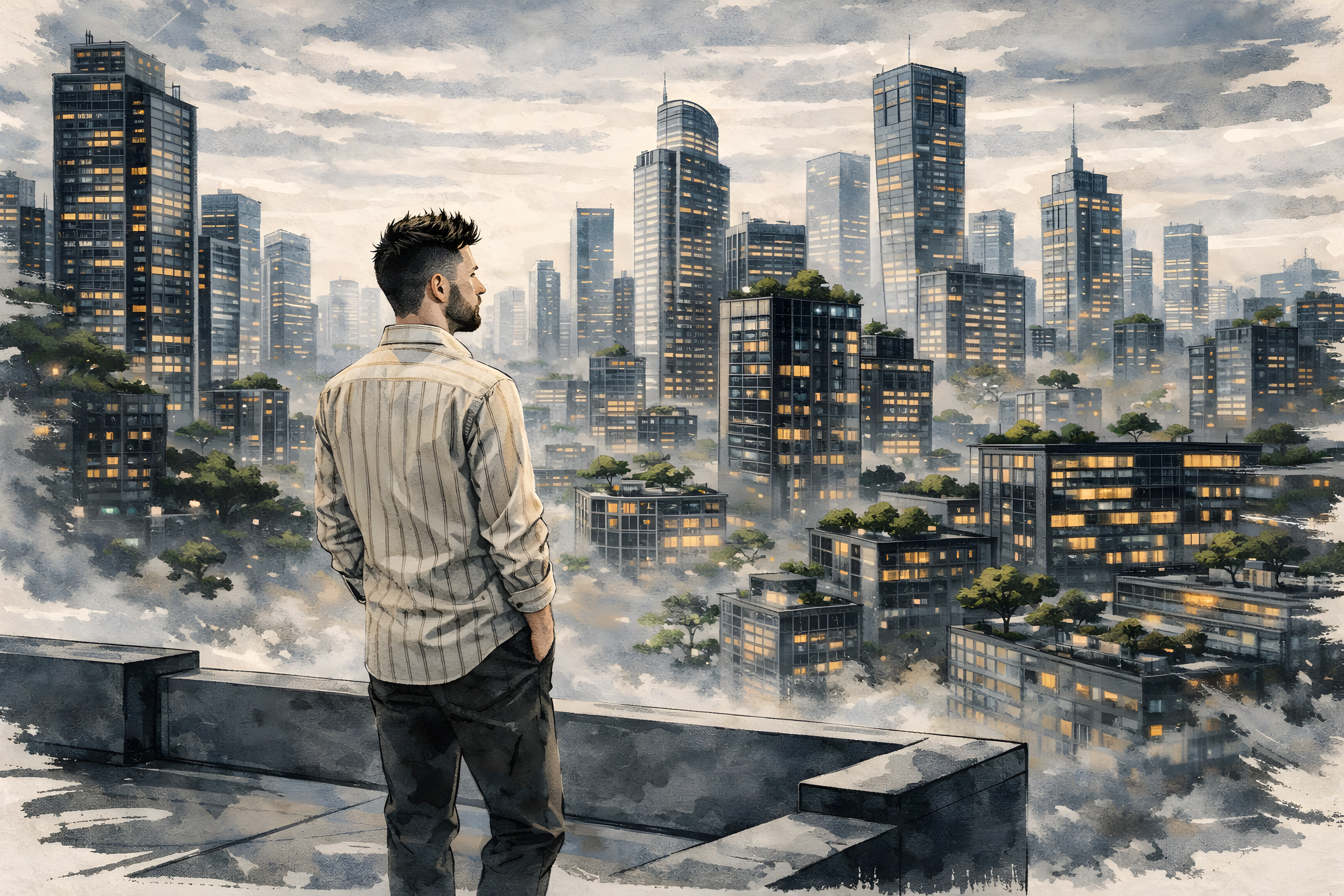
Over the past several months, my husband and I have been living in two places at once. One is our downtown apartment, where our furniture still sits, our routines remain familiar, and life continues much as it always has. The other exists almost entirely in our imagination. It is a house we do not yet own, but one we’ve already begun inhabiting in quiet ways, picturing ourselves sipping coffee at the kitchen island, settling into new routines, and wondering what an ordinary weekday evening might feel like there. The home-buying process begins long before closing day. For a while, you find yourself living in both places at once.
Throughout our search, it became increasingly clear that we weren’t simply looking for more space or a quieter neighborhood. Every home invited us to imagine a slightly different version of our lives. We weren’t evaluating countertops or floor plans nearly as much as we were trying to better understand a version of ourselves that didn’t yet exist. What might our mornings look like here? Would we come to know the neighbors? Would the things that excited us today still matter five or ten years from now? Had we overlooked something important? Somewhere beneath the inspections, mortgage rates, and negotiations was an entirely different set of questions about a future neither of us could possibly know yet. As someone who has always found comfort in certainty, I found that difficult to accept. The more I imagined our life inside each home, the more I realized that many of the answers I was looking for simply didn’t exist yet.
My instinct when faced with uncertainty is to go looking for answers, so I found myself turning to my favorite AI chatbots. If there was a question that could be asked, I probably asked it. I uploaded inspection reports, compared neighborhoods, analyzed renovation costs, debated commute times, researched property values, and questioned nearly every decision from every conceivable angle. Every new piece of information was another opportunity to reduce uncertainty and quiet the persistent feeling that I was overlooking something critically important. It took me longer than I’d like to admit, but eventually I realized I wasn’t really asking AI about the house anymore, I was asking it to reassure me. Looking back, I don’t think I was searching for better answers as much as I was searching for permission to stop worrying. The chatbots helped me ask better questions, highlighted potential risks, and gave me far more confidence than I could have found on my own. But what they couldn’t do was answer the question I cared about most: whether this would become the ideal place to build a happy life together.
The more I thought about it, the more I realized this wasn’t really about buying a house. We are living through a moment in which prediction has become one of technology’s most compelling promises. At work, we increasingly rely on AI to identify risks before they become problems and help us make better decisions. At home, many of us have begun doing the same thing, asking these systems to help us navigate everything from travel plans to major financial decisions. Used thoughtfully, they can be great tools for reducing uncertainty. They help us see possibilities we might have overlooked and approach difficult decisions with greater confidence. What they cannot do is eliminate uncertainty altogether. Some of life’s most meaningful decisions aren’t difficult because we lack information. They’re difficult because they involve versions of ourselves that don’t exist yet.
Somewhere along the way, I realized the challenge was no longer buying a home or deciding where to live. It was accepting that some of the answers I wanted simply did not exist yet. I could continue asking better questions and reducing uncertainty around the edges, but there would always be limits to what anyone—or any technology—could predict. At some point, every meaningful decision reaches the same quiet threshold where analysis has taken you as far as it can, and the only thing left to do is choose. Not because uncertainty has disappeared, but because it never truly does. We spend so much of our lives trying to know the future, when more often than not, it only reveals itself once we’re willing to begin living it.
Beneath all the contracts, negotiations, and logistics lies something deeply human. We are choosing one possible future from among many and committing ourselves to it long before we know how the story will unfold. We fill empty rooms with imagined routines, picture ourselves greeting neighbors we’ve never met, and begin feeling at home in places we’ve barely discovered. The more I thought about it, the more I realized that buying a home is simply one expression of something we do throughout our lives. We accept new jobs before we know what our days there will truly feel like. We begin relationships without knowing where they will lead. We start businesses, creative projects, and entirely new chapters while so much of their shape still exists only in our imagination. Perhaps this has always been the quiet bargain of being human. We move forward before certainty arrives, trusting that understanding comes not before we begin, but because we keep going.
In just a few weeks, we’ll unlock the front door to a house that, until now, has existed mostly in our imagination. We’ll move furniture into rooms we’ve already arranged a hundred different ways in our minds, settle into routines we’ve spent months trying to picture, and slowly begin answering questions that no inspection report, spreadsheet, or AI model could ever fully resolve. Somewhere between unpacking boxes, meeting neighbors, and making coffee on an ordinary Tuesday morning, the life we’ve spent so much time imagining will simply become the life we're living. We won’t notice the exact moment it happens. We rarely do.