










The New Shape of Expertise
In a world where machines can generate endless answers, the real skill may be deciding which ones actually matter.




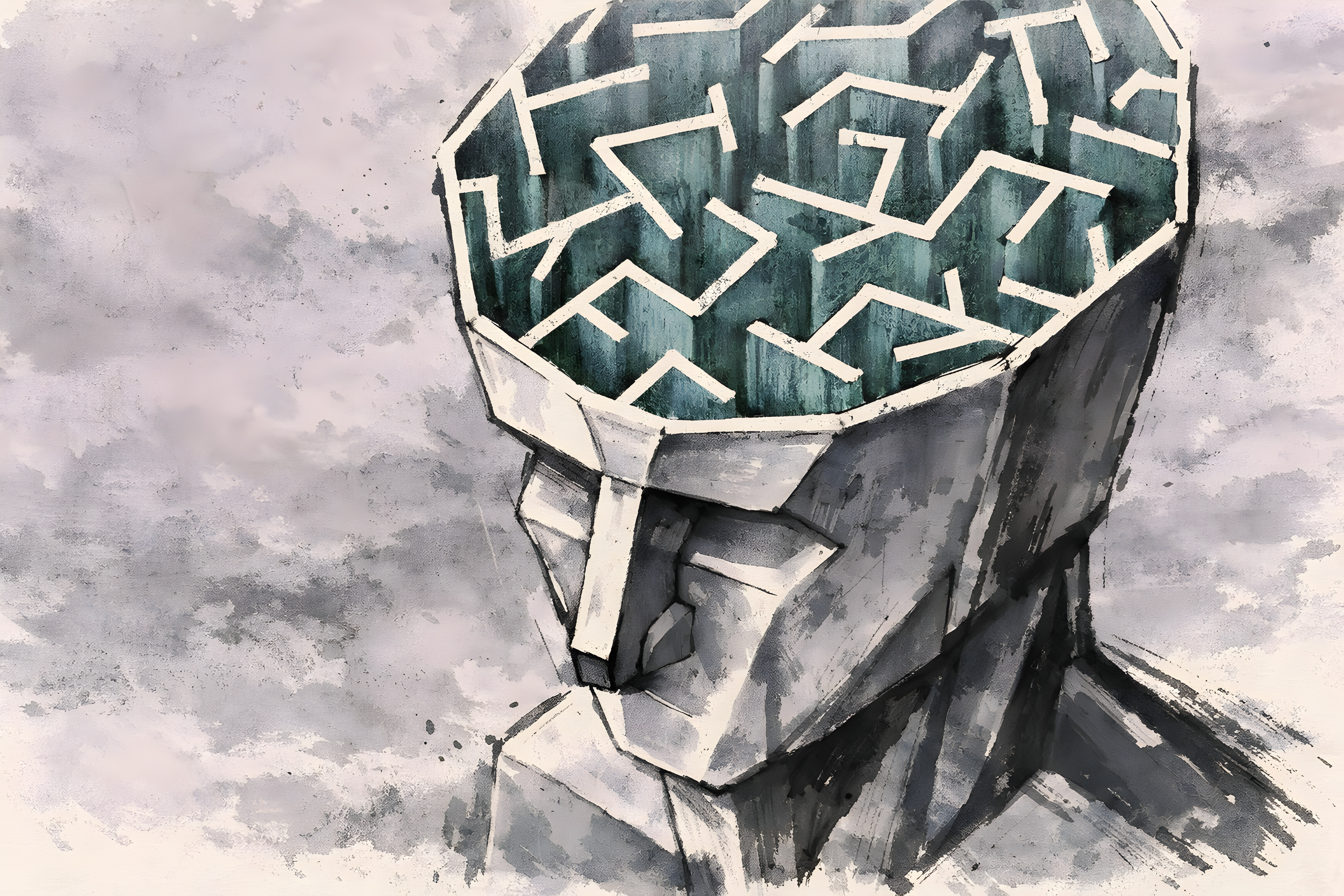
Expertise once meant knowing things others didn’t. As AI systems make information and analysis widely accessible, that definition is beginning to change. Machines can generate answers at incredible speed, but deciding which answers actually matter remains a distinctly human responsibility. In a world filled with increasingly capable systems, judgment may become one of the most valuable skills we retain.
When I was a young professional still trying to find my footing, the economy was recovering from the 2008 financial crisis and jobs were hard to come by. I didn’t have the luxury of being selective. At that point I would have taken almost any opportunity just to escape the retail job I had grown to despise so much that my manager once gently suggested I might need a break from it. In hindsight, that was good advice.
Like many people early in their careers, I was simply trying to survive financially while staring down an impossibly large student loan bill. I began reaching out anywhere I thought there might be even the smallest chance of work. At one point I emailed several art galleries near where I was living in the U Street neighborhood of Washington, D.C., hoping that my interest in art might turn into something resembling a job. One gallery owner actually wrote back with an empathetic reply and offered to let me work there, though unfortunately it would have to be unpaid. Eventually a friend recommended a temp agency, and somewhat awkwardly we both ended up interviewing for the same position. I got the job and she didn’t, and the friendship never quite recovered.
The role itself was a marketing assistant position at a large global law firm. My responsibility was managing data quality inside the firm’s CRM system. It wasn’t the kind of job most people dream about when they imagine their future careers, but it paid well enough and I genuinely found the work interesting. More importantly, it opened the door to a professional world I had never been exposed to before. Many years later I’m still working in legal marketing, which is something I certainly never would have predicted at the time. Desperation, it turns out, can occasionally lead to unexpected opportunity.
What fascinated me most wasn’t the job itself so much as the environment surrounding it. The Washington headquarters of a global law firm is a busy, complex ecosystem, and at the time I knew almost nothing about the legal profession. What I quickly discovered is that lawyers tend to build their careers around very specific forms of expertise. Entire practice areas exist around narrow slices of the law, and within those areas lawyers often develop reputations for knowing things that others simply don’t.
At its simplest, expertise meant possessing knowledge that other lawyers or clients did not. Of course the internet and Google already existed, but information was not always instantly accessible and was often difficult to quickly verify. Many insights could only be gleaned through years of experience working within a particular legal field or industry sector. To succeed, lawyers—and professionals across many industries—needed both access to knowledge and the training required to interpret it correctly.
What’s both fascinating and unsettling is that we may be watching that old dynamic break down in real time. Information is now abundant and instantly accessible to almost anyone with a phone or computer. At the same time, the tools that generate and process that information are improving at an astonishing pace, or at least that’s what their creators confidently promise. These systems are now able to perform tasks that once required specialized expertise, including legal work that previously would have required hours of careful investigation and analysis.
One of the most useful things about modern AI tools is how quickly they produce answers. Ask a system to summarize a complicated topic, outline a strategy, or draft a piece of writing and within seconds you receive something that looks thoughtful, structured, and surprisingly polished. In many cases the output is genuinely useful. Tasks that once required hours of research or drafting can now happen almost instantly. But the moment that truly matters arrives immediately afterward. You review the response and a deeper set of questions begins to emerge: Is the output factually correct? Did the system actually understand my prompt the way I intended? Is any of this actually the right direction?
I see this happen constantly in my own work. I’ll often find myself feeding a chatbot a long stream of thoughts, gradually adding more context as I go—what to include and what to avoid, things it should consider, even reminders about earlier parts of the conversation. Without that extra guidance, the response can easily drift in the wrong direction or miss important context in ways that could lead to mistakes.
Part of the challenge is that AI systems lack situational awareness. Even if a system were trained on nearly everything a company knows—its data, internal documents, products, even information about its employees and customers—it still wouldn’t fully understand the dynamics that shape real decisions—the internal politics, who holds influence, which risks leadership is willing to tolerate, or how a decision might ripple through the organization.
And most people aren’t even working with systems that sophisticated. The everyday chatbots many of us use have far less context. They can’t see the unspoken incentives shaping a decision, the longer-term strategy behind a project, or the quiet trade-offs leaders are weighing as they decide what risks are worth taking. A human still has to evaluate each output, question its assumptions, and decide whether it should shape the next step.
That pause—between receiving an answer and deciding what to do with it—is becoming one of the most important moments in modern work. Some writers and researchers have begun referring to this as the judgment gap. As technology expands our ability to generate information, analysis, and ideas, our ability to evaluate those outputs wisely isn’t keeping up. Machines can generate an endless stream of easy answers, but humans still have to decide which ones actually matter. That dynamic is beginning to reshape what expertise looks like.
That pause—between receiving an answer and deciding what to do with it—is becoming one of the most important moments in modern work.
For many professions, this shift may seem subtle today, but its implications are likely to grow more significant over time. Historically, expertise was often defined by access to knowledge that others lacked. Careers were built around gathering information and applying structured reasoning to it. As machines increasingly assist with those tasks, however, the value of simply producing analysis begins to change. What may matter more going forward is deciding what to do with it. That is where judgment becomes paramount.
Judgment often involves weighing context, recognizing competing incentives, and anticipating consequences. Sometimes it means choosing the best option available. Other times it means realizing that none of the available options are quite right. Like most human skills, judgment develops slowly. It grows through experience, reflection, and the gradual recognition of patterns that only become ingrained over years—sometimes decades.
In practical terms, this shift is likely to redefine what expertise looks like. The professionals who remain valuable will not necessarily be the ones producing the most information or generating the largest number of ideas. Instead, value may increasingly accumulate around those who can identify what actually matters within the overwhelming flow of available output—people who can simplify complexity, ask the right questions at the right moments, and recognize when a seemingly impressive answer is pointing in the wrong direction.
The future of work may not revolve around competing with machines on speed or efficiency. Those contests are largely settled. The real advantage may lie in something quieter: discernment, and the ability to evaluate options thoughtfully in a world filled with endless ideas and recommendations. Judgment may become one of the most important advantages humans retain—not because machines lack intelligence, but because intelligence alone is not enough. Intelligence generates possibilities; judgment decides which ones deserve attention. In that environment, the person who can calmly step back and say this is the direction worth pursuing may become more valuable than ever.
Intelligence generates possibilities; judgment decides which ones deserve attention.
One challenge, of course, is that judgment cannot be downloaded or automated. It develops slowly, through experience, reflection, and the quiet accumulation of lessons over time. As machines expand what is technically possible, humans may find their greatest value not in keeping pace with those capabilities, but in guiding them. In a world filled with increasingly capable systems, the most useful skill may simply be knowing what actually matters.
Looking back at that first job I took inside a law firm, I couldn’t have imagined that the shape of expertise itself might change. Yet that may be exactly what is now quietly unfolding around us.